 English
 Deutsch
 Polski
 Français
 Čeština
 Nederlands
 Italiano
 Español
How to make plush for a Kickstarter campaign
Get a physical sample and a written unit price before the campaign goes live, build the funding goal and reward tiers around the 500-piece minimum, and set the delivery date from real lead times plus a buffer.
The short answer
Most crowdfunded plush campaigns that run late do so for the same reason: the toy did not exist when the campaign launched. The order that works is sample first, campaign second, production third.
- Before launch: design (if needed), a paid sample and a written unit price.
- During the campaign: photos of the real sample, tiers built around the minimum run.
- After funding: the production order, sized to the number of backers.
- Minimum: 500 pieces per design, whatever the size.
- Lead time: about five weeks for design and sample, then 8–12 weeks for production, including laboratory testing.
Why the sample comes before the launch
A drawing does not tell you how a plush will look once it is sewn. Proportions shift, thin limbs flop, a face that reads well on screen can look flat in fabric. The sample is where those problems are found and fixed, and it is the only honest basis for a unit price.
The sample is paid separately and credited against the production order. If the campaign funds, you have not spent that money twice. If it does not, you have a finished prototype and a pattern you can use later, which is still better than finding the problems after backers have paid.
If you only have one view of your mascot, the design work comes first: front, side and back views that a pattern-maker can work from. That takes three to five weeks. Our guide on how to design a brand mascot covers what the turnaround sheets need to show.
What a unit really costs
Custom plush starts from €10 incl. VAT per piece at the 500-piece minimum. Your toy’s price depends on size, the number of pattern pieces, fabrics and how the logo or outfit is applied. We send the unit price at two quantity breaks and the tooling cost in one message, within two working days of receiving the artwork, the size and the quantity.
The unit price is not your cost per backer. Before you set the funding goal, add up:
- the production run at the quantity you plan to order, plus tooling;
- the sample, if you count it as a campaign cost;
- packaging per reward: a box, a card, an extra pin;
- shipping to you or a fulfilment partner, then on to each backer;
- the platform’s and the payment processor’s fees;
- VAT. Prices on our site include VAT; VAT-registered businesses in another EU member state are invoiced with reverse charge after the number is checked in VIES.
Then add a margin for the backers who never complete their survey and the parcels that come back. The full breakdown of what moves a plush price is in how much custom plush toys cost.
Quantities and reward tiers
The minimum is 500 pieces per design, so the funding goal has to cover at least 500 toys. Stretch goals that add a second size or a second design each add another run of 500, not a few dozen extra pieces. Each size counts towards the minimum separately.
| Tier idea | What it means for production |
|---|---|
| One plush, one size | The core run. Everything else is built around it |
| Plush plus a numbered card or box | Same run, extra packaging item per piece |
| Second size as a stretch goal | A second pattern, a second sample and another 500 pieces |
| Second design as a stretch goal | Design work, a new sample and another 500 pieces |
Set stretch goals only where the extra funding really pays for an extra run. If a campaign ends just above the 500 mark, order slightly more than you need: spares cover damaged parcels and late pledges. A repeat order from the same pattern takes 8–10 weeks and costs less, because the tooling exists.
The delivery date you promise
Count from the day the campaign closes and the money arrives, not from the launch:
- Production: 8–12 weeks from the order, including EN71 testing of a batch sample. Testing cannot be shortened.
- Backer surveys: run them during production so addresses are ready when the goods are.
- Fulfilment: packing and posting hundreds of individual parcels takes time of its own.
- Buffer: add several weeks. Backers forgive a cautious date far more readily than a missed one.
Avoid promising delivery for a specific holiday unless the sums leave a clear margin. Postal networks slow down in December, and a toy that arrives in January is a gift that missed.
EN71 and CE for EU backers
A plush toy sold to children in the EU has to meet the toy safety rules: EN71 testing and a CE declaration of conformity. Crowdfunding does not change that. Every production batch we make is tested to EN71-1, -2 and -3 in an accredited laboratory, and the reports and the CE declaration ship with the goods. If the toy may reach children under three, the eyes are embroidered rather than fitted. More detail in EN71 and CE: what applies to what.
Keep those documents: shops and marketplaces will ask for them after the campaign.
Rights and confidentiality
The mascot is yours: the rights belong to you, and so do the patterns made for it. We sign an NDA on request, and we do not show your toy anywhere, including our own portfolio, without your permission. That matters before a reveal: the sample and the artwork stay out of sight until you announce them.
If the mascot was created with another artist or a publisher, settle who owns what before the campaign. A dispute after funding is the worst moment to discover the paperwork is missing.
Photos for the campaign page
Photograph the real sample. Backers can tell a render from a sewn toy, and a page that shows only renders invites the question of whether the toy exists. Good campaign photos of a plush include:
- front, side and back on a plain background;
- the toy held in a hand or next to a familiar object, so the size is obvious;
- close-ups of the face, the embroidery and the sewn-in label;
- the packaging, if it is part of the reward.
If you show renders as well, label them as renders.
Getting the toys to backers
We are a Polish company with our own workshop in Poland, and the goods ship from inside the EU. For EU backers that means no import duty on delivery. Backers outside the EU may face import charges in their own country; say so on the campaign page so nobody is surprised.
Decide before launch where the run goes: to you, to a fulfilment partner, or split between warehouses in several countries. Each toy comes in a poly bag with a warning notice, packed in master cartons, so a fulfilment partner can pick and post them straight away.
Questions people ask
Can I launch a plush campaign before I have a sample?
You can, but you will be quoting a price and a date for a toy that has not been made. A sample takes about five weeks including design, is paid separately and is credited against the production order, so getting it before launch costs little extra and removes most of the risk.
What is the minimum order for crowdfunded plush?
500 pieces per design, whatever the size. Each additional size or design is another run of at least 500, which is why stretch goals should be set only where the funding covers that run.
How long after the campaign ends will backers get their plush?
Production takes 8–12 weeks from the order, including laboratory testing, and individual fulfilment comes on top of that. Promise a date that includes both and a buffer of several weeks.
Can the plush be sold in the EU after the campaign?
Yes. Every batch is tested to EN71-1, -2 and -3 and comes with a CE declaration of conformity, which is what shops and marketplaces ask for. See the page for game studios and creators or send your mascot through the quote form.
For reference
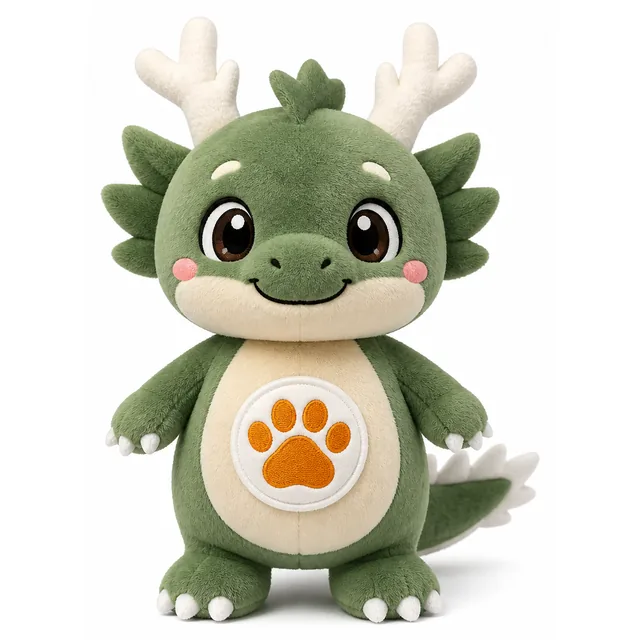
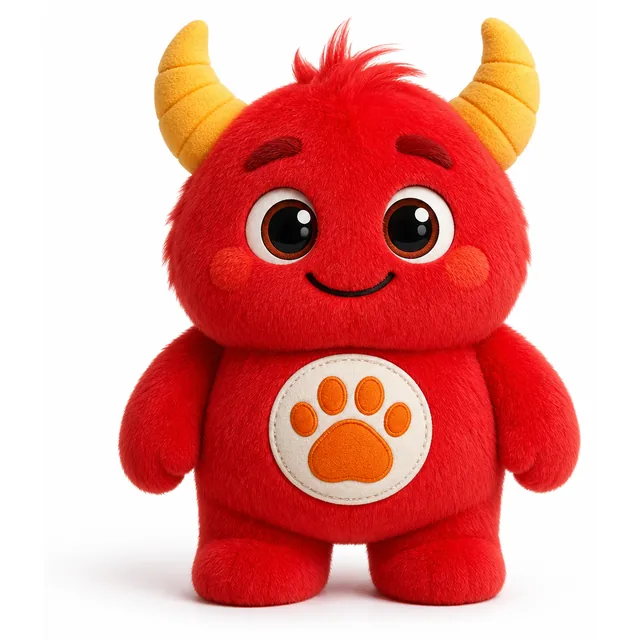
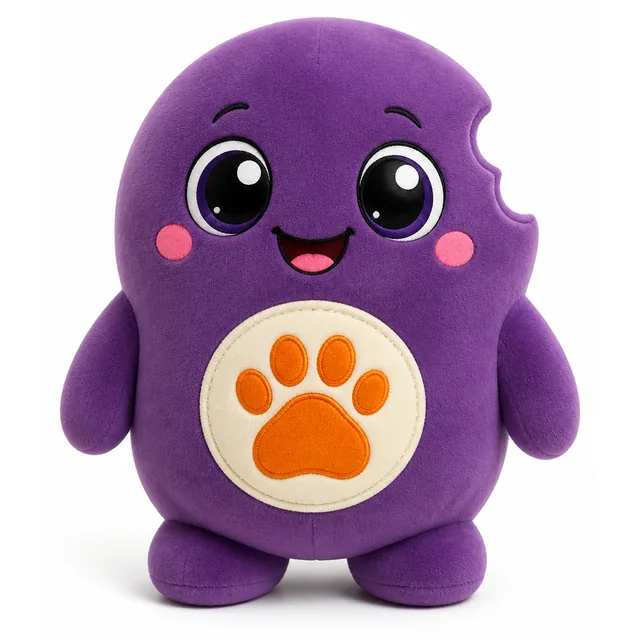
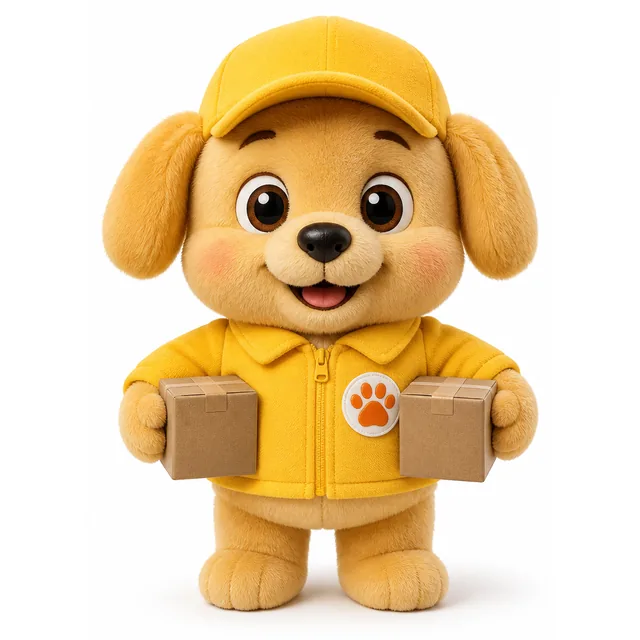
Studio visualisations of our own concepts.
Planning a campaign?
Send the artwork, the size and your campaign dates. You get the unit price at two quantity breaks within two working days.
We reply within 1 hour on working days
