 English
 Deutsch
 Polski
 Français
 Čeština
 Nederlands
 Italiano
 Español
How much do custom plush toys cost?
Custom plush starts from €10 incl. VAT per piece at the 500-piece minimum. Size, construction and quantity move it from there, and a run takes 8–12 weeks.
The short answer
A custom-shape plush toy made to your character costs from €10 incl. VAT per piece at the minimum run of 500 pieces per design. A small, simple toy sits near that figure; a large toy with many pattern pieces, several fabrics and a printed outfit costs more. The unit price falls as the quantity rises, because the fixed costs are spread over more pieces.
- Minimum: 500 pieces per design, whatever the size.
- Lead time: 8–12 weeks, including laboratory testing. Plush runs cannot be rushed.
- Paperwork: EN71-1, -2 and -3 test reports and a CE declaration with every batch.
- Prices on this site include VAT.
What is in the unit price?
A quote for a plush run covers the production itself: patterns graded per size, fabric cut and sewn, filling weighed per piece so the batch is consistent, sewn-in and hang labels to your artwork, each toy in a poly bag with a warning notice, and master cartons. EN71 test reports and the CE declaration of conformity ship with the goods. Two samples are retained for the record.
The sample is paid separately and credited against the production order. The tooling cost is shown in the same message as the unit price, so nothing appears for the first time at the sample stage.
What drives the cost?
Every plush quote is built from the same handful of factors. Some change the cost of each piece; others are fixed costs that do not care how many pieces you order.
| Factor | Why it costs | Per piece or fixed? |
|---|---|---|
| Size | More fabric, more filling, a larger carton share. Sizes run from 15 cm to 60 cm, larger on request | Per piece |
| Pattern pieces | Each piece is cut and sewn separately; a six-piece head takes far longer than a two-piece one | Per piece |
| Fabrics and colours | Every extra fabric is another cut and another colour match; non-standard colours may need a dye run | Mostly per piece |
| Face and details | Embroidered features add stitching time; safety-locked eyes add parts that must pass pull tests | Per piece |
| Logo method | A woven label costs least; an embroidered patch more; a printed shirt adds a second production line | Per piece |
| Labels and packaging | Hang tags, printed boxes, barcodes and country-specific warnings are each a separate item | Per piece, plus artwork set-up |
| Patterns, sampling and tooling | The character is turned into a pattern and sampled until it matches the drawing | Fixed |
| Laboratory testing | A batch sample goes to an accredited laboratory for EN71-1, -2 and -3 | Fixed per batch |
Why is there a 500-piece minimum?
Because the fixed costs are the same at any quantity. Pattern-making, sampling and laboratory testing cost as much for 500 pieces as for 5000. At 500 they are divided by 500; at 5000 each piece carries a tenth of that share. Below a few hundred pieces those fixed costs dominate the unit price, and a toy stops making commercial sense for retail or for a giveaway.
The minimum is per design, not per order. A 15 cm toy with one fabric and a 45 cm toy with six pattern pieces are different production problems, so they differ in unit price, not in the minimum.
How do quantity breaks work?
The unit price falls steeply between the first quantity break and the second, then flattens. Past a certain volume the fixed costs are already a small share, and what remains is material and sewing time, which do not get much cheaper.
We quote the unit price at two quantity breaks, plus the tooling cost, in the same message. That lets you decide whether a larger order is worth the storage and the cash tied up in stock. A repeat order from the same pattern costs less, because the tooling already exists, and takes 8–10 weeks.
How long does a run take?
Eight to twelve weeks from the approved drawing:
- Weeks 1–3: pattern and sample. You hold the sample before anything else happens.
- Week 4: sample approval in writing, or another sample.
- Weeks 5–9: the full run, checked against the approved sample.
- Weeks 10–11: laboratory testing of a batch sample.
- Week 12: packing and delivery.
Testing sets the floor, which is why plush cannot be rushed. If the character still needs designing, add three to five weeks for that.
How to bring the price down
- Stay in the middle of the size range. 25–35 cm is the practical choice for retail.
- Simplify the pattern. Fewer pieces in the head is the biggest saving that does not show.
- Use standard fur colours where the brand allows it, and keep custom dye for the one colour that matters.
- Brand with a woven label or a hang tag rather than a printed outfit.
- Order sizes deliberately. Each size counts towards the run separately, so add a second size only when it has a clear job.
What not to cut: the sample stage and batch testing. They are what let a retailer list the toy.
Questions people ask
Is VAT included in the price?
Prices on the site include VAT. VAT-registered businesses in another EU member state are invoiced with reverse charge after the VAT number is checked against VIES.
Who pays for the sample?
You do, and it is credited against the production order. That keeps sampling serious on both sides.
Do I need a character design first?
You need artwork a pattern can be made from. If you have clean front and side views, that may be enough; if not, see how to design a brand mascot.
Where can I get an exact figure?
Send the character, the size and the quantity through the quote form. You get the unit price at two quantity breaks within two working days. Background on the custom plush page and the pricing page.
For reference
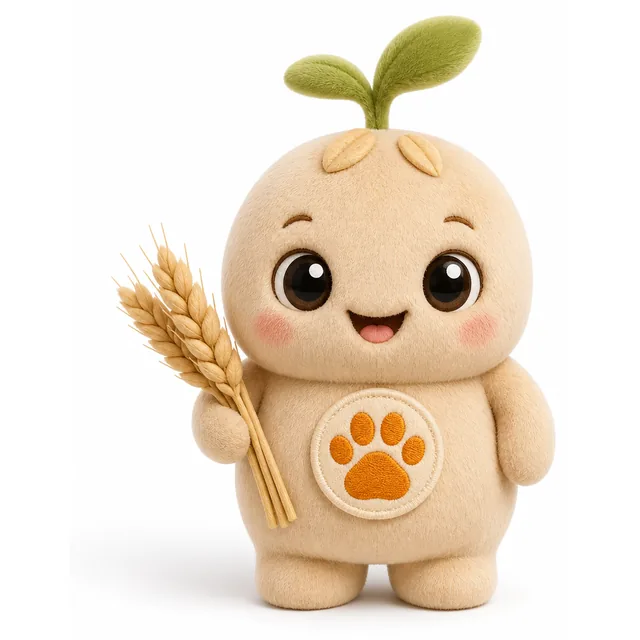
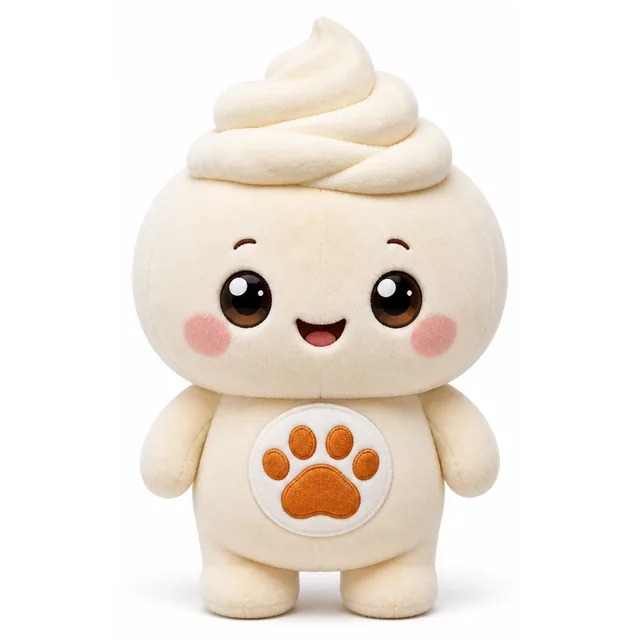
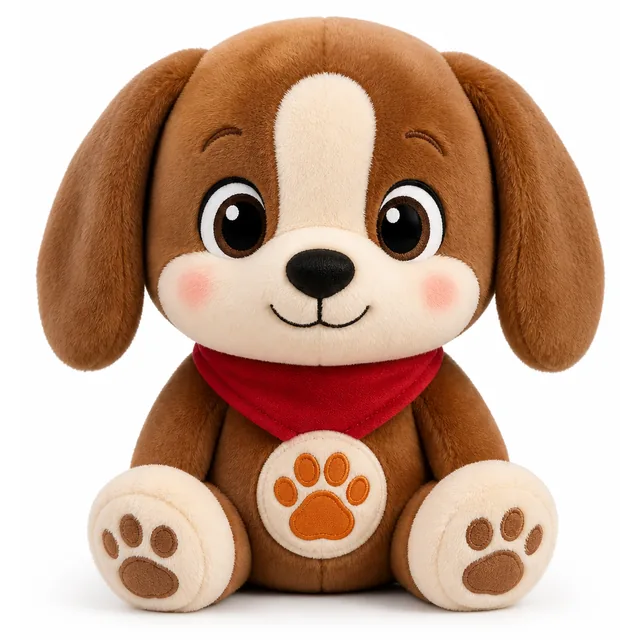
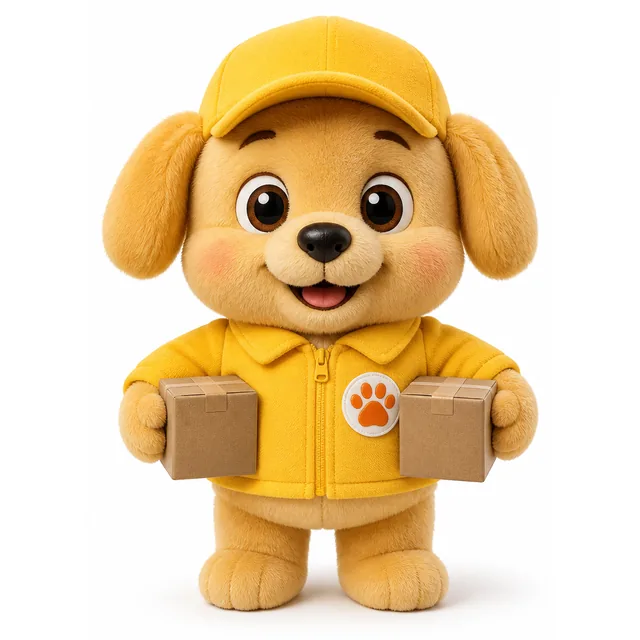
Studio visualisations of our own concepts.
Want the unit price for your toy?
Send the character, the size and the quantity. You get two quantity breaks in two working days.
We reply within 1 hour on working days
