 English
 Deutsch
 Polski
 Français
 Čeština
 Nederlands
 Italiano
 Español
Mascot costume or plush toy: which does your brand need first?
If people need to meet your character, start with the costume. If people need to take it home, start with plush. Where the character has to work decides the order, more than the budget does.
The short answer
A mascot costume is a single object that puts your character in a room with people. A plush toy is a product in hundreds of hands. They solve different problems, so the right first purchase depends on which problem you have now.
- Costume first when the character has to appear: matchdays, store openings, trade fairs, school events, city festivals.
- Plush first when the character has to be kept, sold or given away: club shops, gift-with-purchase promotions, account-opening gifts, souvenirs.
- Design first, either way. If the character does not yet exist as turnaround sheets, that is the real first step, and it serves both formats.
Costume and plush side by side
The two are made in different ways, bought in different quantities and governed by different rules. The figures below are the ones we work to.
| Mascot costume | Custom plush toy | |
|---|---|---|
| What it is | Walk-in costume worn by an adult performer | Soft toy made to your character |
| Quantity | One piece, fitted to a named performer | Minimum 500 pieces per design |
| Price | From €1,250 incl. VAT | From €10 incl. VAT per piece at the minimum run |
| Lead time | 12–16 weeks from design approval; rush from 8 weeks | 8–12 weeks; cannot be rushed |
| Rules that apply | Not a toy, so EN71 does not apply; material declarations and flammability data | A toy in law: EN71-1, -2 and -3 testing and a CE declaration |
| Ongoing cost | Performer time, cleaning, storage, transport | Storage of stock and distribution |
| Reach | Everyone at the event, and every photo taken there | One person per piece, for as long as they keep it |
When should the costume come first?
Choose the costume first if the character's job is to be present. A costume is the version people photograph, hug and remember from an event, and it is the only one that can react to an audience.
- You have fixed dates on the calendar: a season, a fair, an opening, a festival.
- You can find a performer, or a small pool of them, and an hour or two per appearance.
- You need one character, not hundreds of units, and you want to test how it lands before committing to stock.
- The audience is on site: a stadium, a shop floor, a campus, a ward.
A costume also tells you whether the character works. If people queue for photos at the first two events, a plush run is a safe next step. If they walk past, you have learned that for the price of one costume rather than 500 toys.
When should plush come first?
Choose plush first if the character's job is to travel. A toy goes home, sits on a desk or a shelf and keeps the brand in view long after the event.
- You sell the character: a club shop, a gift shop, a visitor centre, retail shelves.
- You give it away in volume: promotions, onboarding packs, children's account gifts.
- You have nobody to wear a costume, or nowhere to store one.
- You need a product that can be posted, not a person who has to be booked.
Plush has a hard floor: 500 pieces per design. Tooling, pattern-making and laboratory testing cost the same at 500 as at 5000, so below that quantity the unit price stops making sense. If you need fifty, plush is the wrong first purchase.
What does each one cost to run?
The purchase price is only part of it.
A costume needs people and care. With fans and a cooling insert, a performer can work 25–30 minutes per shift at room temperature, so a long event needs breaks or a second performer. Liners are washed after use, the costume is stored upright in a dry place and it travels in its case. Seams and structure carry a 12-month warranty; gloves, feet and liners are wear parts.
Plush needs space and a plan. Five hundred toys arrive individually bagged in master cartons. Somebody has to store them, ship them and decide what happens to the last hundred. A repeat order from the same pattern takes 8–10 weeks, so a sell-out is a planning problem, not a disaster.
Can one design serve both?
Yes, and it should. A character designed once, with turnaround sheets and a 3D model, can be built as a costume and sewn as a plush without drifting into two different animals. Character design takes three to five weeks and starts from €250 incl. VAT for a 2D concept.
Expect the two to match closely, not identically. Fur behaves differently at 30 cm and at 1.9 m, and a plush face has to be simplified to survive at small sizes. We colour-match both and show you them together before production.
Ordering in sequence is common: the costume for the first season, then plush once the character has proved itself. Because the design files and patterns stay on record, the second format does not start from zero.
Five questions that decide it
- Where will people first meet the character: in person, or in a bag or on a shelf?
- Do you have a performer, and a dry place to keep a costume?
- Do you need one character or at least 500 units?
- Is there a fixed date? Costumes can be rushed from 8 weeks; plush runs cannot.
- Will the item be sold or given to children? Then it is a toy, and EN71 applies.
If the answers point both ways, start with design. It is the part both formats need, and it is the cheapest way to find out what the character should be.
Questions people ask
Is a mascot costume a toy under EU law?
No. It is worn by an adult performer and falls outside the Toy Safety Directive, so EN71 does not apply to it. Plush toys are toys and need EN71 testing and a CE declaration. More in EN71 and CE: what applies to what.
Can I order fewer than 500 plush toys?
Not as a custom-shape run. The minimum is 500 pieces per design, whatever the size. A costume can be ordered as a single piece.
Which one is quicker to get?
Plush takes 8–12 weeks and costumes 12–16 weeks from design approval, but only a costume can be rushed, from 8 weeks in limited slots. See how long it takes to make a mascot.
Where do I compare prices?
On the pricing page, with what pushes each figure up. For your own character, send a short brief and you get a written quote within two working days.
For reference
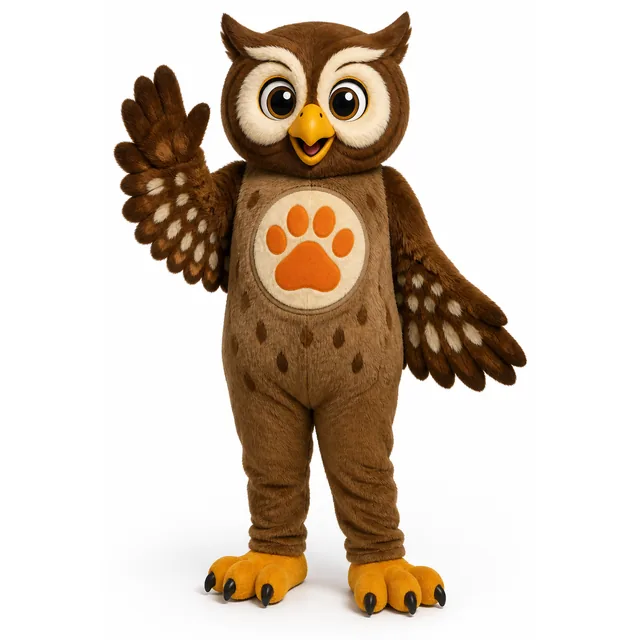
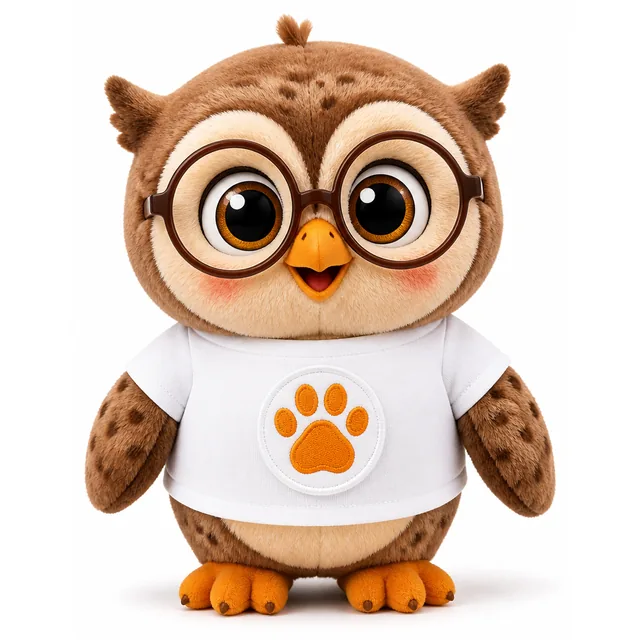
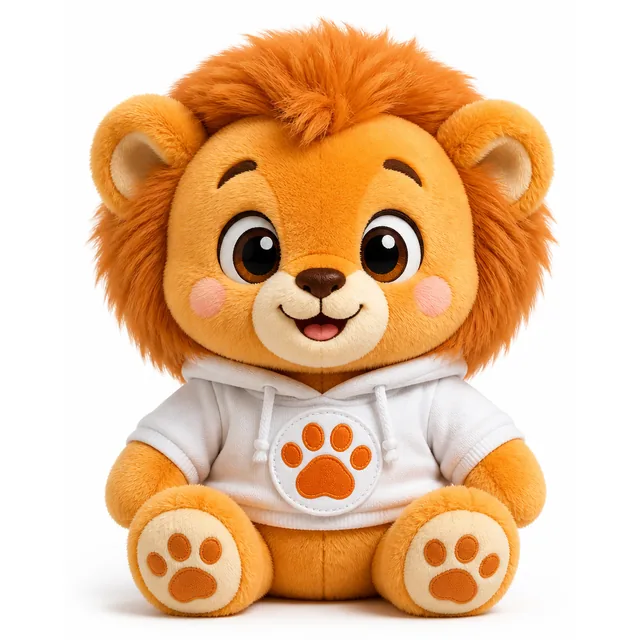
Studio visualisations of our own concepts.
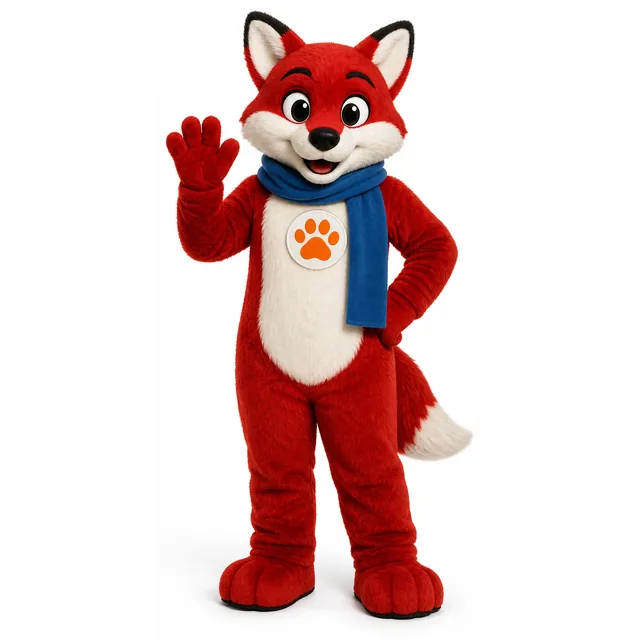
Not sure which comes first?
Tell us where the character has to work. We will say which format to start with.
We reply within 1 hour on working days
