 English
  Deutsch
  Polski
  Français
  Čeština
  Nederlands
  Italiano
  Español
 How much does a mascot costume cost?
The honest answer is a range, and the range is wide for a reason. Here is what actually moves the number.
The range
A custom mascot costume from a European workshop lands in a band, not on a number. At the low end sits a simple animal with a static head, no moving parts and standard fur colours. At the top sits something 2.2 metres tall with an articulated jaw, blinking eyes, custom-dyed fur and a cooling system built for a full-day shift.
The distance between those two is roughly a factor of three. Anyone quoting you a single figure before seeing the character is either quoting the cheapest possible build or guessing.
What pushes it up
The head, above everything else. It is the most labour-intensive part and the one that decides whether the costume is wearable. A larger head needs a stronger internal frame, better ventilation and more careful balancing. Doubling head size does not double the price — it more than doubles the hours.
Moving parts. A jaw that opens, eyes that blink, hands with articulated fingers. Each mechanism has to survive hundreds of cycles inside a foam head with a person underneath it. This is mechanical engineering, priced accordingly.
Custom fur colours. Standard palettes are held in stock. An exact brand colour that does not exist in any catalogue means a custom dye run, which has a minimum quantity — so you pay for more fur than the costume uses.
Deadlines. A rush order displaces other work in the queue. Rush pricing is not opportunism; it is the cost of moving three other projects.
What you can leave out
If the budget is fixed, cut extras rather than construction:
- The second liner set. Useful for back-to-back appearances. Buy it later once you know how hard the costume actually works.
- The wheeled transport case. If the costume lives in one building, a storage bag is enough.
- Full 3D modelling, when the character already exists as clean vector artwork from several angles.
- Moving parts. An articulated jaw is lovely and almost never the reason an audience remembers a mascot.
What not to cut: ventilation, seam reinforcement and the fitting stage. Those are what decide whether the costume survives a season and whether anyone is willing to wear it twice.
Why the cheap ones are cheap
Costumes advertised at a fraction of these ranges exist, and they are cheap for identifiable reasons: no ventilation, a head built from glued blocks rather than a carved frame, seams sewn once instead of reinforced, generic sizing instead of fitting to a performer, and no material documentation at all.
They work for a single photo shoot. They do not survive forty appearances, and the people wearing them tend to find reasons not to.
For reference
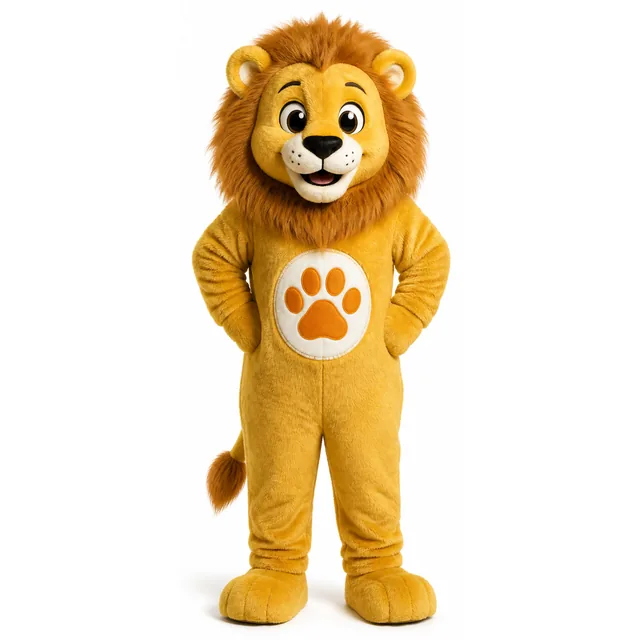
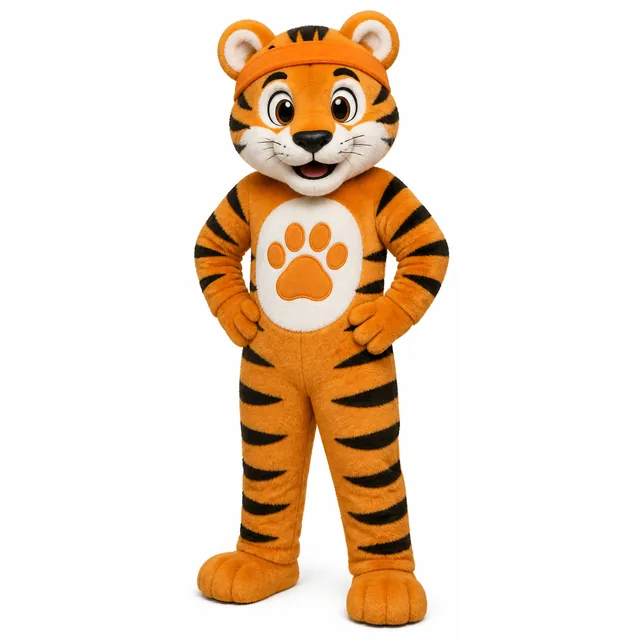
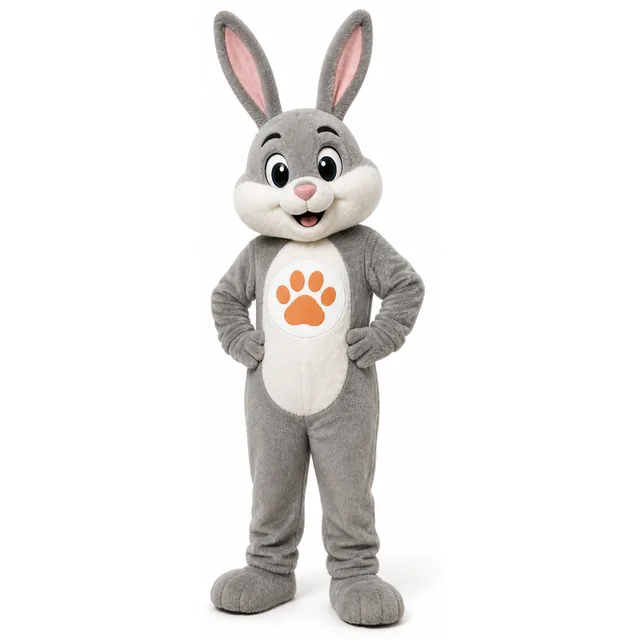
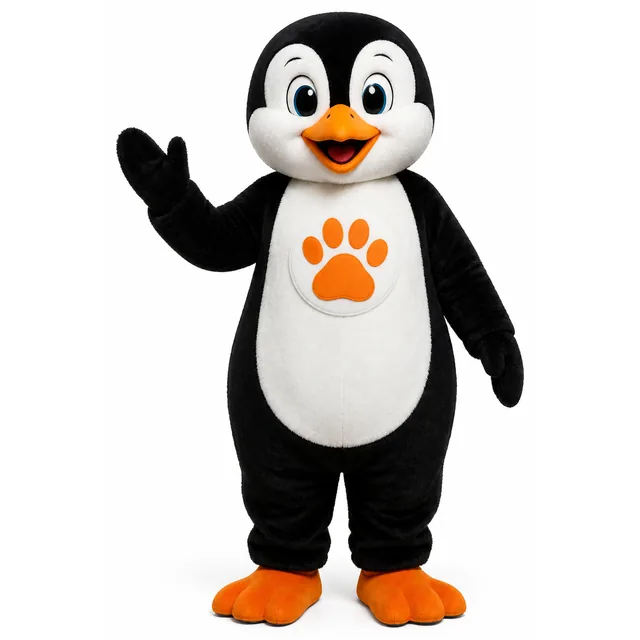
Studio visualisations of our own concepts.
Want a real number?
Describe the character and the deadline. You get a price in two working days.
We reply within 1 hour on working days
